Helping an Older Adult Move Safely
How to recognize mobility changes, assist more safely, and know when additional help may be needed
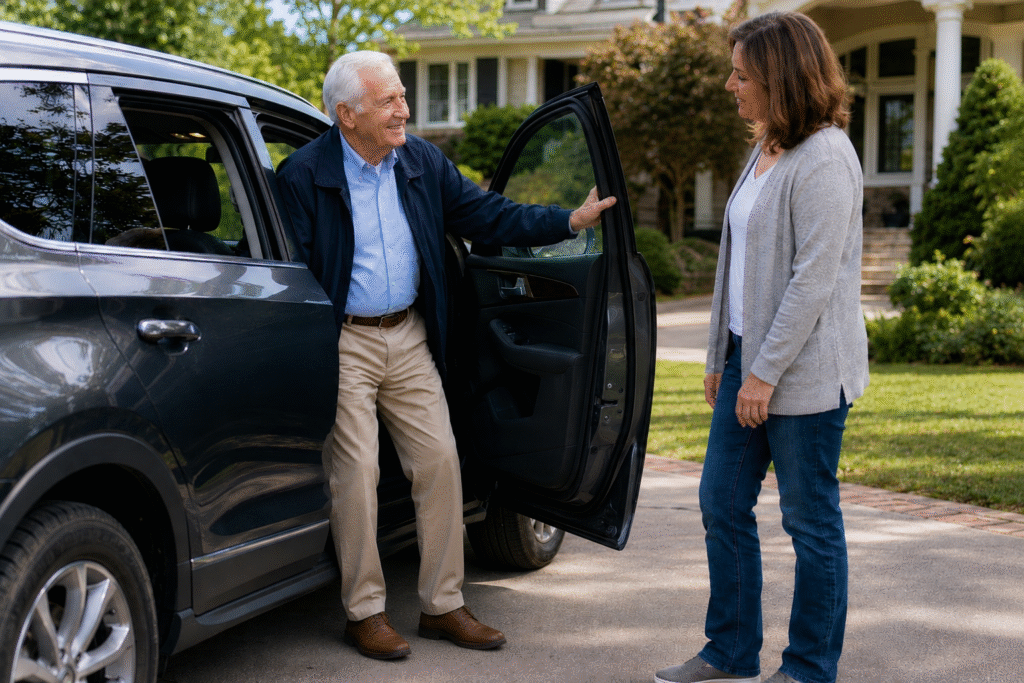
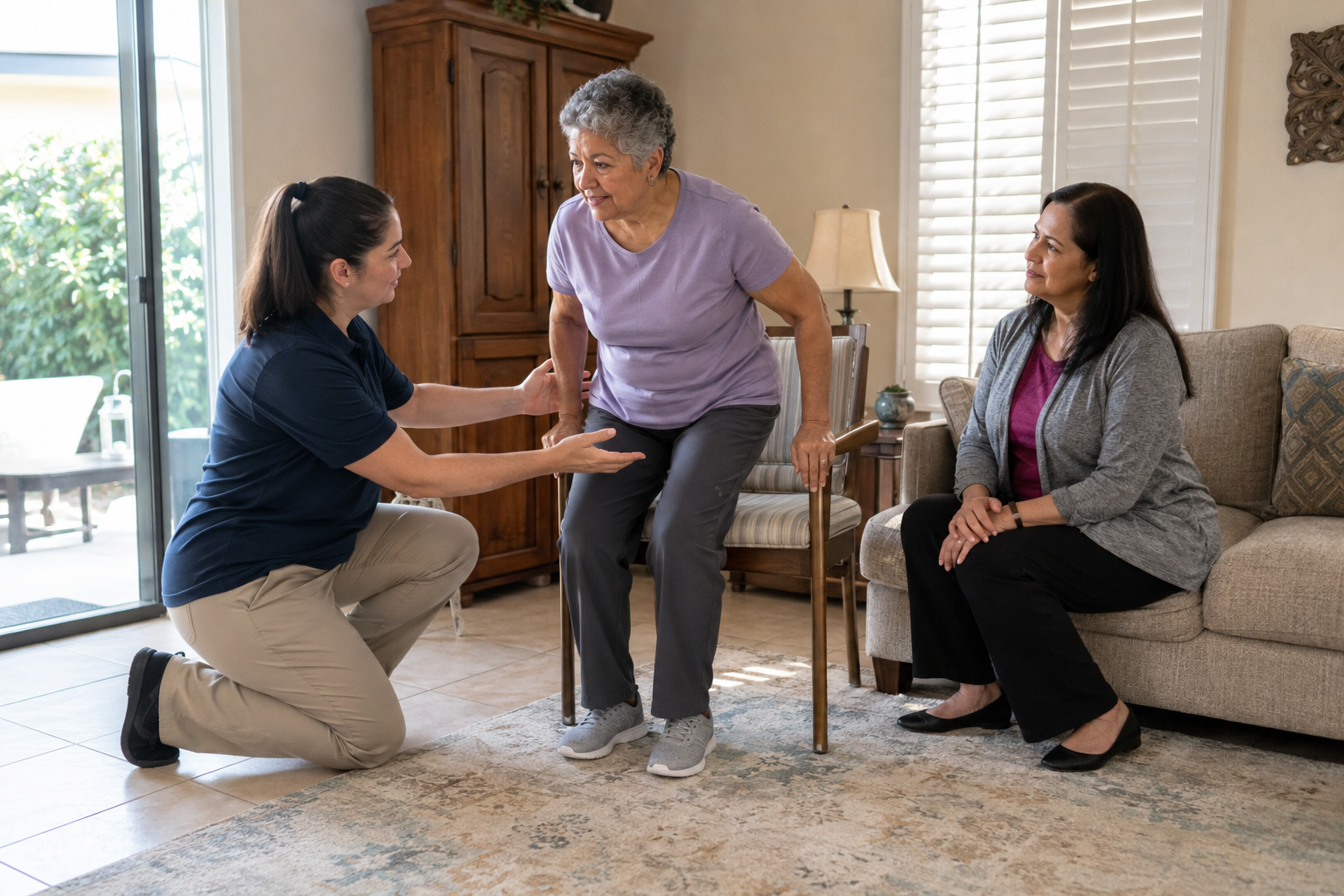
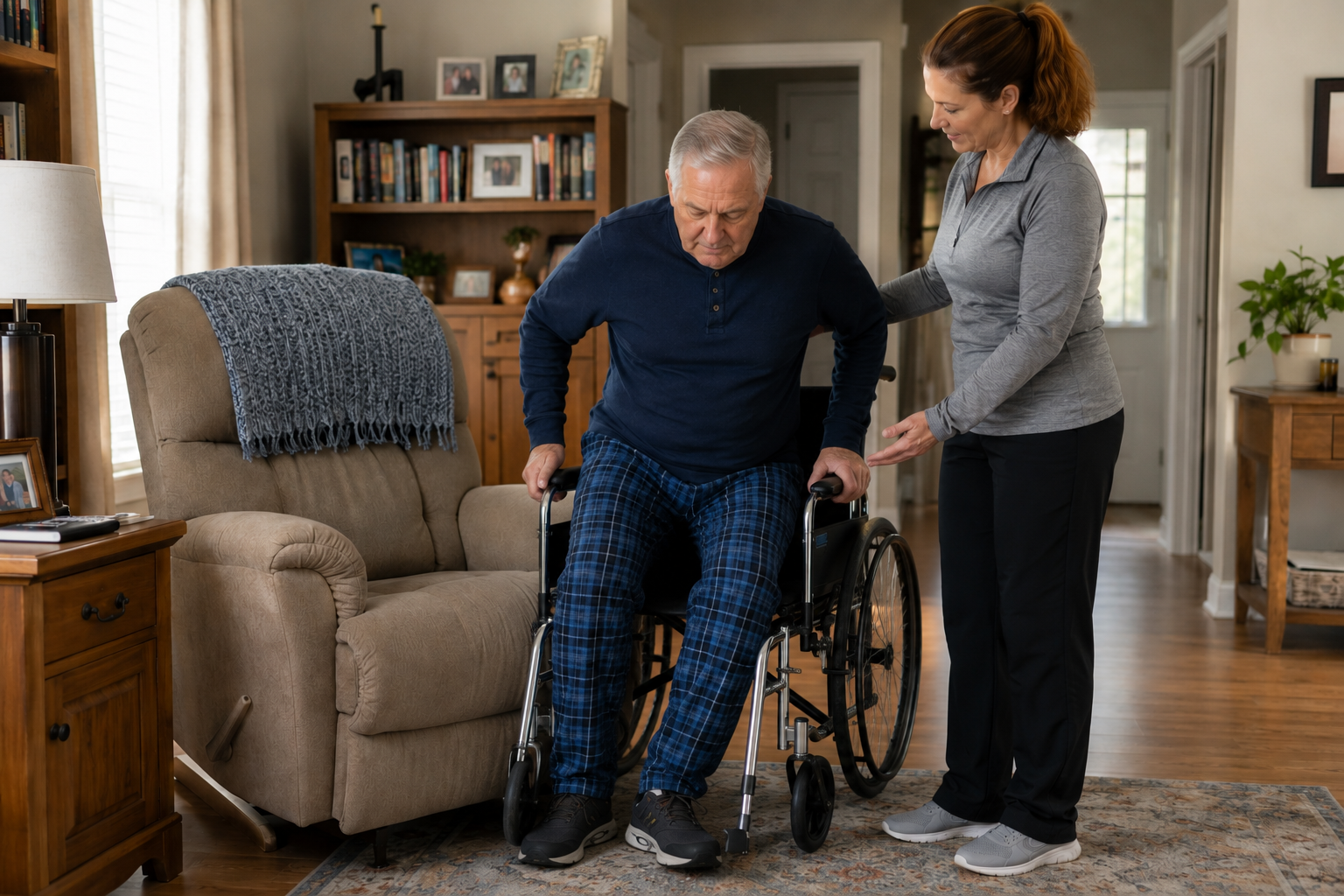
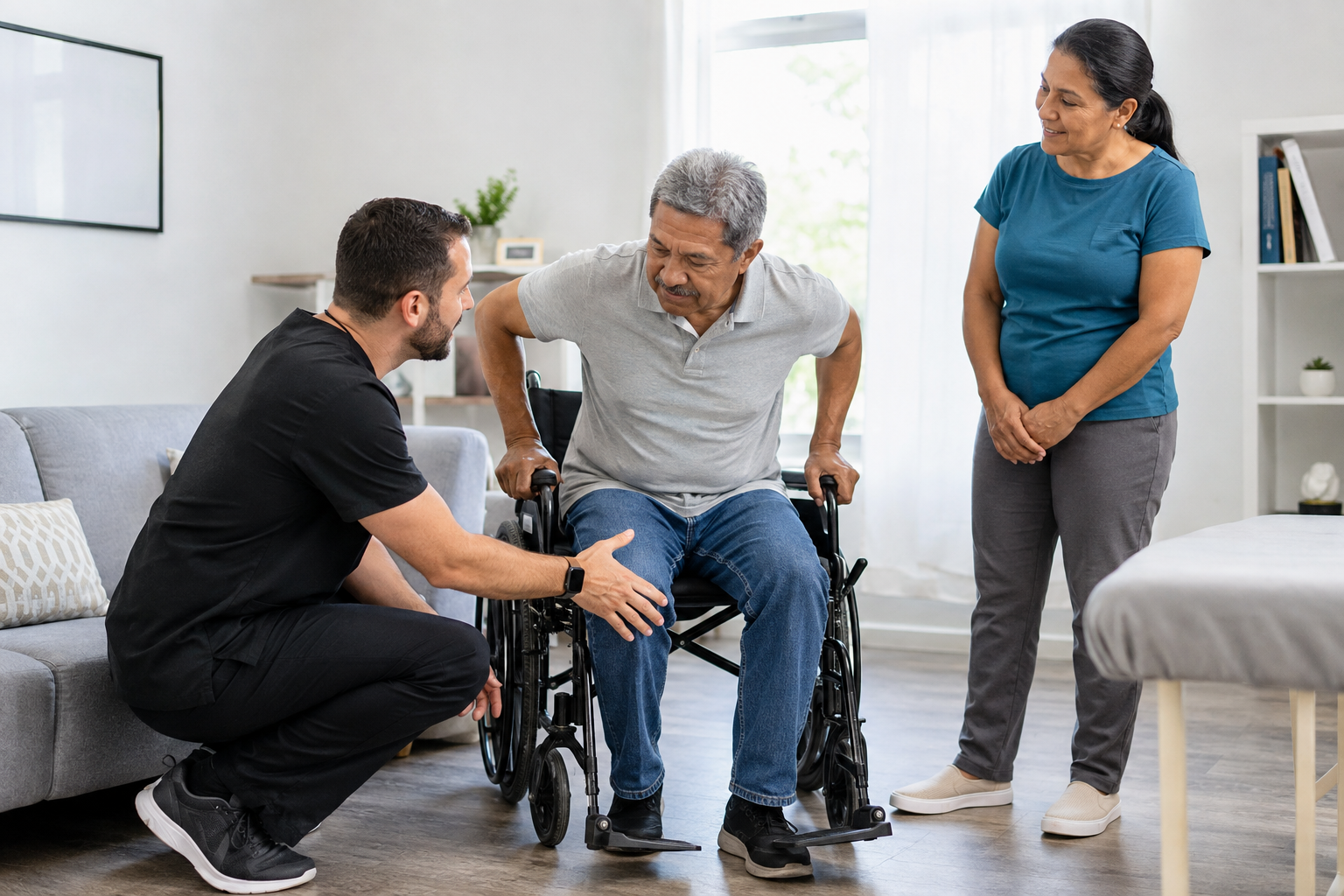
Standing up from a chair. Turning to sit in a wheelchair. Getting into the passenger seat of a car.
Most of us perform these movements without giving them much thought. But as an older adult experiences changes in strength, balance, flexibility, vision, or confidence, these ordinary movements can become some of the riskiest parts of the day.
Healthcare professionals often call these movements “transfers.” A transfer may involve moving from a bed to a walker, standing from the toilet, stepping into the shower, or getting in and out of a vehicle.
Changes in transfer ability often happen gradually. Families may begin helping a little more without realizing how much has changed. They offer an arm, choose higher chairs, park closer to the entrance, or take over errands that once required no assistance.
These adjustments may be helpful, but they can also be early signs that an older adult’s mobility deserves closer attention.
Warning Signs Families Often Miss
Transfer difficulties do not always begin with a fall. The first signs may be subtle.
An older adult may rock several times before standing, push heavily with both arms, or reach for nearby furniture. They may lower themselves abruptly into a chair rather than sitting with control. Getting into a car may take longer, especially when lifting one leg into the vehicle or turning into the seat.
You may also notice changes in behavior. Someone who once enjoyed going out may begin declining invitations, avoiding unfamiliar places, or becoming anxious about stairs, curbs, restaurant seating, or crowded spaces.
Unexplained bruises, soreness, repeated near-falls, or a growing reliance on another person should also be taken seriously.
Families sometimes interpret these changes as stubbornness, nervousness, or simply “slowing down.” In reality, the person may be adapting to weakness, pain, poor balance, or fear of falling.
Why Helping Can Become Risky
When someone appears unsteady, the natural reaction is often to grab an arm, lift under the arms, or rush the movement before the person loses balance.
These reactions are understandable, but they can put both people at risk. Pulling on an older adult’s arms or clothing may cause pain or injury. A caregiver who twists, reaches, or suddenly supports another person’s full weight may also injure their back, shoulders, or knees.
It is important to remember that a walker is not designed to be pulled on while standing. A caregiver’s neck, shoulders, or clothing should not be used as a grab bar either.
Safe assistance should help the older adult participate in the movement rather than simply being lifted from one place to another.
Preparation Makes a Difference
A safer transfer begins before anyone moves.
Clear away rugs, cords, footrests, clutter, or anything else that could interfere with the person’s feet or mobility equipment. Position the walker or wheelchair where it will be needed, and lock the wheelchair brakes. Make sure the person is wearing secure footwear rather than loose slippers, socks, or open-backed shoes.
The destination should be ready before the transfer begins. If the person is moving to a wheelchair, the chair should already be positioned. If they are getting into a car, open the door fully and move the seat back when possible.
Trying to adjust equipment while supporting an unsteady person creates unnecessary risk.
Communication Is Part of the Transfer
Clear communication is just as important as physical assistance.
Before beginning, explain the full plan in simple terms. For example, you might say, “We’re going to stand, step with your right foot, and turn until you feel the wheelchair behind your legs.”
During the movement, give one short instruction at a time.
“Lean forward.”
“Stand.”
“Turn.”
“Reach back.”
“Sit slowly.”
Pause after each instruction. Older adults may need more time to process the direction, shift their weight, or move their feet. Repeating several instructions at once can create confusion, especially when someone is anxious, tired, visually impaired, or living with cognitive changes.
Vague phrases such as “Come on,” “Over here,” or “Just turn around” may make sense to the caregiver but may not provide enough information to the person moving.
A calm voice and an unhurried pace can improve both safety and confidence.
Getting Into and Out of a Car
Vehicle transfers are a common source of difficulty because they require balance, turning, bending, and lifting the legs.
In many cases, it is easier for the person to back up until they feel the car seat behind their legs, sit down first, and then turn and bring both legs into the vehicle. This is often safer than stepping sideways into the car while trying to duck under the doorframe.
Getting out generally works in reverse. The person brings their legs outside, moves toward the edge of the seat, places both feet securely, and then stands.
Vehicle height matters. Low cars may be difficult to stand from, while tall trucks or SUVs may require too much climbing. Families may begin choosing which vehicle to use based on the older adult’s mobility, even before they recognize this as a meaningful change.
Know When to Stop
Not every transfer can be made safe through better communication or positioning.
Stop if the person becomes dizzy, experiences pain, suddenly appears weak, cannot follow instructions, or begins placing most of their weight on the caregiver. Do not attempt to continue simply because the person needs to reach the bathroom, car, or bed.
Repeated knee buckling, falls, near-falls, or transfers that require two people are signs that additional support may be needed.
Sudden changes in mobility, particularly new weakness, confusion, severe dizziness, or difficulty using one side of the body, should be reported promptly to a healthcare professional.
When Professional Guidance Can Help
A physical therapist or occupational therapist can evaluate how an older adult stands, turns, walks, and sits. They may recommend exercises, equipment, environmental changes, or a specific transfer technique based on the person’s abilities.
Professional caregivers can also provide valuable support with everyday routines, transportation, appointments, and mobility assistance. The goal is not to take away independence. The right support can help an older adult continue participating in daily life while reducing the risk of a fall or injury.
Families do not need to wait for a serious accident before asking for help.
Recognizing changes early, preparing the environment, communicating clearly, and knowing when assistance is needed can make everyday movement safer for both older adults and the people who care for them.
Caregiver To You helps families create safer, more manageable routines at home and in the community. Contact us to learn how personalized caregiving support can help your loved one remain active, comfortable, and connected.